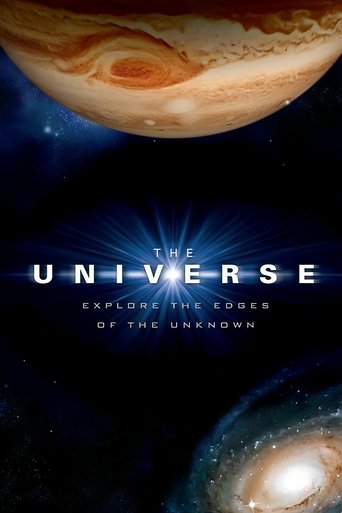
Ha llegado el momento de examinar de nuevo un universo muy antiguo. En sus misterios, encontramos los secretos de nuestro pasado y la llave para nuestro futuro. Ésta es la historia de lo que hemos aprendido sobre el espacio. Han pasado cincuenta años desde que la humanidad se aventuró en el espacio exterior, pero es ahora cuando los cielos empiezan a revelarnos sus grandes secretos. Los robots nos permiten ver las rocas rojas de Marte. La sondas de la NASA viajan a velocidades increíbles para estudiar los cometas. Los telescopios de gran alcance captan las imágenes violentas del nacimiento de estrellas y de su desaparición en los agujeros negros. Todo ello ha cambiado de forma extraordinaria nuestra percepción. Mientras nuestro planeta se abrasa por los efectos del calentamiento global, es lógico mirar al cielo y preguntarse sobre el resto del universo. ¿Existe algún otro lugar que pueda albergar vida? ¿O es verdad que no hay ningún otro sitio como nuestro hogar, como la Tierra? Cada episodio de esta serie examinará cómo se llevaron a cabo los descubrimientos, así como las fascinantes historias de los científicos y los exploradores que se atrevieron a adentrarse en ese territorio desconocido que llamamos universo.
Dónde ver
-
 Tivify
ver todas las opciones Datos de disponibilidad: JustWatch
- Temporadas
- 9
- Episodios emitidos
- 87
- Último emitido
- S09E06
- Duración total
- 2d 18h
Línea de tiempo cuándo se emitió cada temporada
- Temporada 1 mayo de 2007 – septiembre de 2007 14 episodios
- Temporada 2 noviembre de 2007 – abril de 2008 18 episodios
- Temporada 3 noviembre de 2008 – febrero de 2009 12 episodios
- Temporada 4 agosto de 2009 – noviembre de 2009 12 episodios
- Temporada 5 julio de 2010 – septiembre de 2010 8 episodios
- Temporada 6 octubre de 2011 – diciembre de 2011 7 episodios
- Temporada 7 abril de 2012 – junio de 2012 7 episodios
- la serie estuvo 1 año y 8 meses parada
- Temporada 8 marzo de 2014 4 episodios
- Temporada 9 abril de 2015 – mayo de 2015 5 episodios
-

S04E01 Estrellas moribundas
18 de agosto · 45min buscar el avance
Ver sinopsis
Sin traducción al español
Season 4 opens with an exploration of dying stars, the process where stars become supernovas, and, occasionally, become the biggest blast in the universe as a gamma ray burst (GRB). One death star, named WR104, lurks 8,000 light-years from Earth and some believe its GRB arrow is aimed directly at us. A death star galaxy named 3C321 is a frightening vision of what could one day befall the Milky Way galaxy: a companion galaxy's black hole being hammered with a constant blast of high-energy particles, wreaking havoc with its celestial bodies. Nearby, Death Stars Eta Carinae and Betelgeuse burn through their fuel supplies as they hurtle toward extinction...which just may be too close for comfort.
-
S04E02 El día en que la luna desapareció
25 de agosto · 45min buscar el avance
Ver sinopsis
Sin traducción al español
Without the moon, Earth would be a very different and desolate place today--four hours of sunlight with pitch-black nights, steady 100-mph winds spawning giant hurricanes that last for months, and virtually no complex life forms, much less humans. Safe to say, we probably owe our very existence to the moon. But what if it suddenly disappeared?
-

S04E03 Y cayó desde el espacio
1 de septiembre · 45min buscar el avance
Ver sinopsis
Sin traducción al español
Every year, thousands of objects both natural and manmade plummet through our atmosphere and crash into the Earth. These menacing messengers from the sky provide scientists with amazing insights into the natural, and not so natural, phenomena of the cosmos. From space rocks crashing through homes to cosmic boulders triggering mass extinctions to rocket parts landing on front lawns, explore objects that fall from the heavens, such as asteroids, comets, meteor showers and space debris.
-

S04E04 Las mayores explosiones del universo
8 de septiembre · 45min buscar el avance
Ver sinopsis
Sin traducción al español
An examination of the most powerful explosions and blasts in the universe. Includes a look at the Mexico's Yucatán peninsula and the impact which caused the Chicxulub crater. Also a look at gamma rays and Big Bang Theory.
-
S04E05 A la caza de planetas anillados
15 de septiembre · 45min buscar el avance
Ver sinopsis
Sin traducción al español
They are breathtaking, lethal and a constant source of surprise. The stunning rings of Saturn have mesmerized countless scientists over the centuries. With particles the size of a house shooting at 53,000 miles per hour around the planet, any spacecraft passing through would meet an instant and catastrophic end. Inside the rings is like a NASCAR race - with bumping, jostling and frequent collisions that can cause a massive spin-out. Lesser known are the other planets that have rings - Uranus, Jupiter, Neptune, possibly Pluto and Mars. Even Earth has a ring. Comprised of some 200 satellites in a geosynchronous orbit, it is the only known man-made ring in the universe. But the most remarkable thing about rings is that they contain the story of the birth of our solar system, and entire distant galaxies. Rings are more than a wonder of the universe - they reveal the secrets of our own origins.
-

S04E06 10 maneras de destruir la tierra
22 de septiembre · 45min buscar el avance
Ver sinopsis
Sin traducción al español
Experts cook up ways you could destroy the Earth, including swallowing it with a black hole, blowing it up with anti-matter, hurling it into the Sun, and switching off gravity.
-

S04E07 Los cúmulos cósmicos
29 de septiembre · 45min buscar el avance
Ver sinopsis
Sin traducción al español
They are the one-stop-shopping places for learning all about the nature and variety of stars in the Universe. They're unique, because in clusters, all the stars were born at about the same time, from the same material and all are at the same approximate distance from Earth. This means we can be sure that any differences among them are due to their true natures and not distorted by different distances from Earth and other factors.
-
S04E08 La guerra del espacio
6 de octubre · 45min buscar el avance
Ver sinopsis
Sin traducción al español
Outer space is already an essential part of America's ability to fight wars. Our military depends on satellites for many things, such as communications, reconnaissance and targeting information. But so far, no country has put weapons into space, although the U.S. and China have both shown they can shoot down satellites with ground-based missiles. If weapons do become a part of space, how will they work, how effective will they be, and what type of damage could they do? From ground-based lasers to telephone-pole sized rods hurtling from space at two miles per second to the far out weapons of the distant future, it's time to "lock and load" for Space Wars.
-
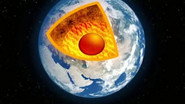
S04E09 Universo líquido
20 de octubre · 45min buscar el avance
Ver sinopsis
Sin traducción al español
On alien planets, they rain from the sky as scalding iron. On distant moons, even at hundreds of degrees below zero, they slosh around in pristine lakes of methane. They can cover entire planets in miles-deep oceans of electrified hydrogen metal. Or erupt on alien worlds through miles-high geysers. They churn in the interiors of dead stars and even our own planet. They're so rare in the universe, they almost don't exist, but these are the magical liquids of our Liquid Universe.
-

S04E10 Púlsares y Quásares
27 de octubre · 45min buscar el avance
Ver sinopsis
Sin traducción al español
They sort of sound like the same phenomenon, but Pulsars and Quasars are very different. Pulsars are tiny--only a few miles across--but they spin as fast as a kitchen blender and sweep the sky with beacons of radiation that make them appear to flash on and off. They have unbelievably strong magnetic fields, are more accurate than atomic clocks...and they can even tell aliens just where to find the Earth! Quasars are at the other end of the spectrum. Quasars are huge cores of galaxies with black holes that are called "monsters" and which spit lobes of radiating gas called "DRAGNs." Quasars are so far away, we see them as they were only in the distant past--meaning they existed only in the early universe, when they may have played a major role in the creation of the galaxies themselves.
-

S04E11 Ciencia, Ficción y Realidad
3 de noviembre · 45min buscar el avance
Ver sinopsis
Sin traducción al español
Warp speed, transporters, wormholes and lasers--they are all staples of science fiction books, movies, and TV shows. But the fantastic world of tomorrow is quickly becoming the futuristic world of today. While you may not be "beaming" to your next appointment any time soon, researchers are preparing for the first tests of a present-day "transporter." And while scientists have long mocked Hollywood's visions of warp speed and faster-than-light travel as prohibited by Einstein's laws, a new generation of physicists continues to rewrite the fundamental rules of the universe. Is there a way around the cosmic speed limit? Maybe... as long as you're prepared to survive a journey through the ultra-high energies of one of the most violent places in the cosmos--the heart of a twisting, swirling vortex that leads either to strange, new worlds... or certain death.
-

S04E12 Energía extrema
10 de noviembre · 45min buscar el avance
Ver sinopsis
Sin traducción al español
Ours is a universe of energy, from powerful jets ejected from black holes to the raw nuclear fury of our Sun. But, the total amount of energy in the universe maintains perfect equilibrium--no more can be added or taken away. Because of this, there are enormous amounts of energy being transferred...electric, thermal, kinetic and magnetic energy are just a few that keep our universe balanced--and create awesome cosmic events and stellar displays.